

Training
Part 61 & Part 141

Private Pilot Certificate
Ready to take flight? Earning your Private Pilot Certificate is your first major step toward becoming a licensed pilot. Whether you're pursuing aviation as a hobby or the foundation for a future career, here’s what you need to know about the training process and requirements.
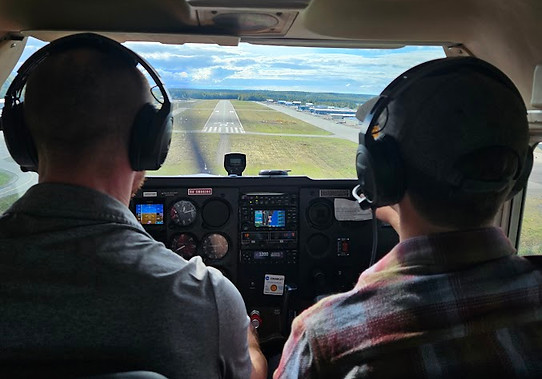
Training Timeline
While the FAA requires a minimum of 40 hours for Part 61 and 35 hours for Part 141, most students complete their training in 50–70 hours.
The pace depends on your availability, learning style, and frequency of lessons.
With consistent scheduling, you can become a private pilot in as little as 3–6 months.
Part 141 v.s. Part 61
Land and Sea Aviation is a Part 141 and Part 61 approved flight school.
Our primary Private Pilot course is conducted under part 141. Part 141 training is structured and syllabus-based.
Part 61 is best suited for al-a-carte style training.
We recommend Part 141 for brand new students, and Part 61 for customers who have already partially completed training.
Part 141 Cost Breakdown
* Chart does not include checkride fees, which are set by examiner, and are subject to change
Part 61 Cost Breakdown
* Chart does not include checkride fees, which are set by examiner, and are subject to change
FAA Requirements
To earn your Private Pilot Certificate in the U.S., you must meet the following Federal Aviation Administration (FAA) minimum requirements:
Eligibility:
-
Age: Be at least 17 years old.
-
Language: Be able to read, speak, write, and understand English.
-
Medical: Hold at least a Third-Class FAA Medical Certificate.
Flight Training:
Part 61: Refer to 14 CFR Part 61 Subpart E
-
Total Flight Time: Minimum of 40 hours, including:
-
20 hours of flight training with an authorized instructor
-
10 hours of solo flight time
-
-
Specific flight experience must include:
-
Cross-country flying
-
Night flying (3 hours minimum)
-
Instrument training (3 hours minimum)
-
Takeoffs and landings at controlled airports
-
Part 141: Refer to Appendix B to Part 141
-
Total Flight Time: Minimum of 35 hours, including:
-
20 hours of flight training with an authorized instructor
-
5 hours of solo flight time
-
-
Specific flight experience must include:
-
Cross-country flying
-
Night flying (3 hours minimum)
-
Instrument training (3 hours minimum)
-
Takeoffs and landings at controlled airports
-
Stage Checks
-
Ground School:
-
Complete ground training with an instructor or via an FAA-approved online or classroom course
-
Learn topics such as:
-
Aerodynamics
-
Weather and airspace
-
Navigation and flight planning
-
FAA regulations and safety procedures
-



Scholarships & Grants
Need an acceptance letter for your scholarship or grant organization?
Alaska State Training and Employment Program *
Workforce Innovation and Opportunity Act *
Visit your local job center in person to start the application process. To find a center near you, check locations at https://jobs.alaska.gov/offices/
Alaska Native Corporation Funding
Contact your corporation representative for more information
Credentialing Assistance (CA) Program
You can request to begin the process of applying by contacting a Credentialling Assistance counselor
Civil Air Patrol (CAP) Scholarships for Cadets
Alaska Performance Scholarship
For high schools students